
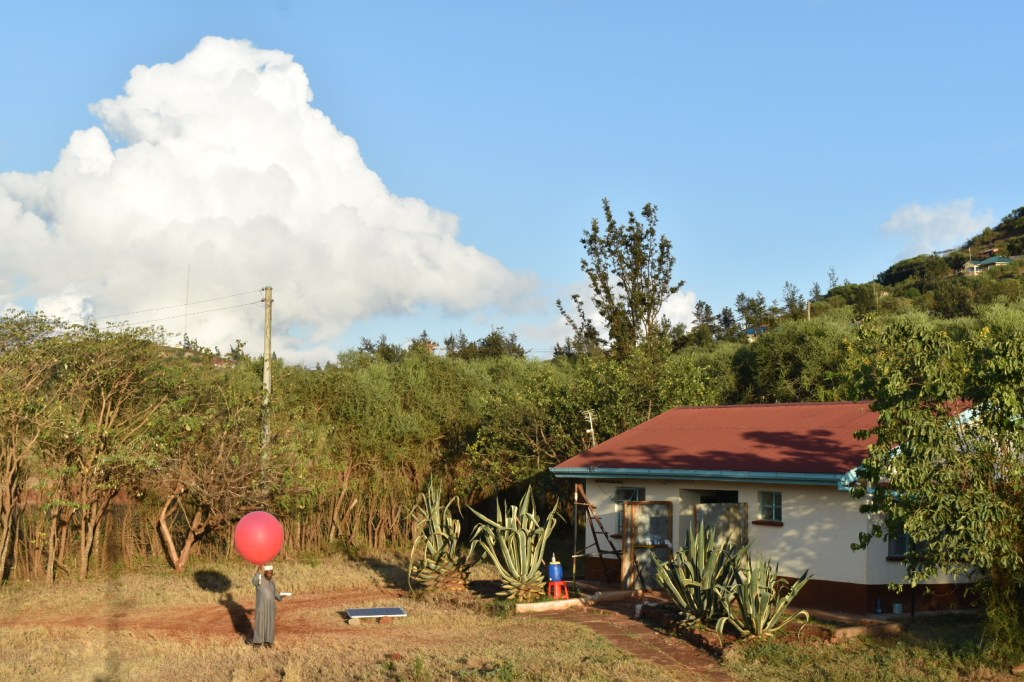
After a delay of a year due to the coronavirus pandemic, the RIFTJet field campaign kicked off in March 2021. We were based at the WMO Station in Marsabit, NW Kenya where Joseph Kinuthia originally discovered the jet.
Marsabit is an interesting place. It is on the slopes of an extinct basaltic shield volcano, which is covered by dense rainforest. The rainforest is home to diverse wildlife, including a herd of elephants. Lake Paradise is in the middle of rainforest in the crator of the extinct volcano. The volcano is surrounded by arid plains leading down to the Chalbi desert (only 60 km away).

To measure the Turkana Jet, we released radiosondes every 3 hours for 26 days (eight per day), and set up two automatic weather stations at 2 m and 10 m. The ongoing pandemic restrictions ensured a strict curfew, with no travelling allowed after dark. This meant sleeping on the floor of the weather station for those on the night shift.

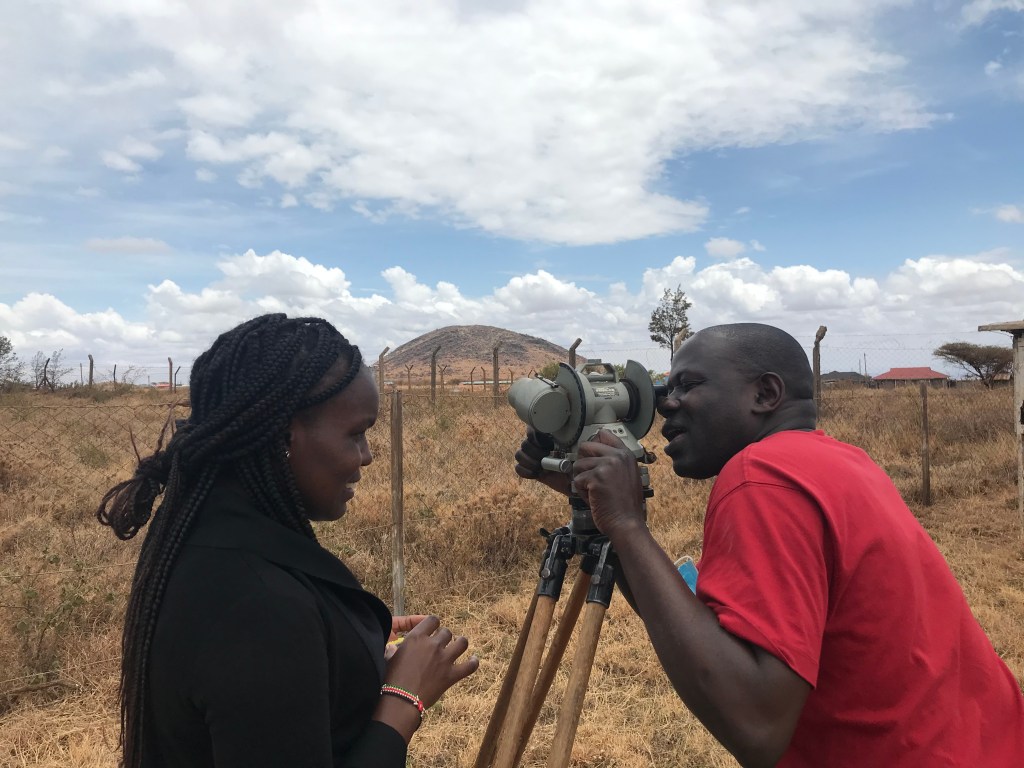
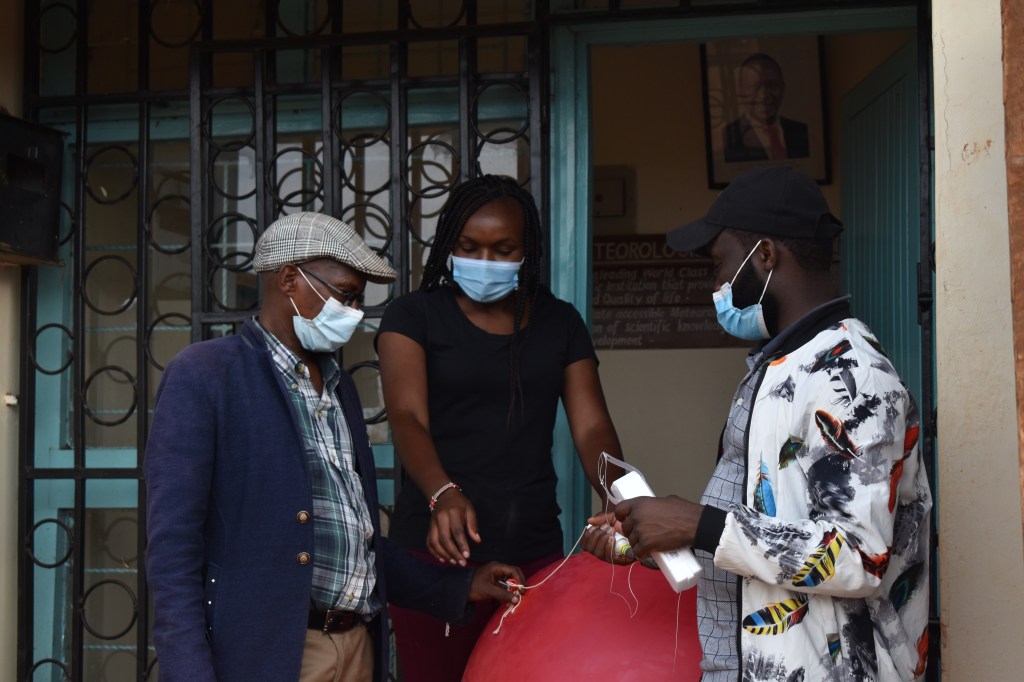
Alongside the radiosonde measurements, we stumbled across the old theodolite used for pilot balloon tracking by Kinuthia. Sebastian Engelstaedter had experience of using the theodolite from a field campaign in Chad to measure a very different, dust emitting, low-level jet in the Sahara (the Bodele Low Level Jet). We ran some simultaneous releases, tracking the balloon with the theodolite to check the consistency of measurement.
The Results
With the uncertainty of planning and the year long delay, we were very happy when live data from the first radiosonde showed a beautiful low-level jet, with a peak speed of 15 m/s. Over the next month, we found that the Turkana Jet was present most of the time (72% of releases), even during the day.
The peak wind speeds were at 3 am at night, but the jet remained really strong through the morning up to 9 am local time. This is a feature that the reanalysis data don’t manage to capture.
One factor in the strong wind speeds are the formation of subsidence inversions at lower-levels of the atmosphere, just above the core of the Turkana Jet (~300 m or so). In a paper in Journal of Climate (see publications) we hypothesise that the subsidence inversions contribute to the jet strength by preventing the upward mixing of momentum. We are testing this hypothesis in model simulations run by the UK Met Office.
Pilot balloons cannot retrieve measurements of water vapour transport. A key aim of the project was to constrain model estimates of water vapour transport with radiosonde data.
We found very high water vapour transport (172 kg/m/s) throughout the campaign related to the Turkana Jet. While reanalysis data were able to capture the magnitude of water vapour transport, this was likely related to the errors in surface height in ERA5 and MERRA2, which mean that the integrated water vapour transport is calculated over a greater atmospheric depth.
Since we were at fairly high altitude at Marsabit (1337 m), we wanted to know about the consistency of the jet down towards the Chalbi Desert. We had identified a village called Bubisa as a possible release site on basis of Google Earth images showing southeaterly orientated sand streaks near the site. Bubisa was 60 km away at an altitude of 600 m, the name translates literally as ‘place of strong winds’
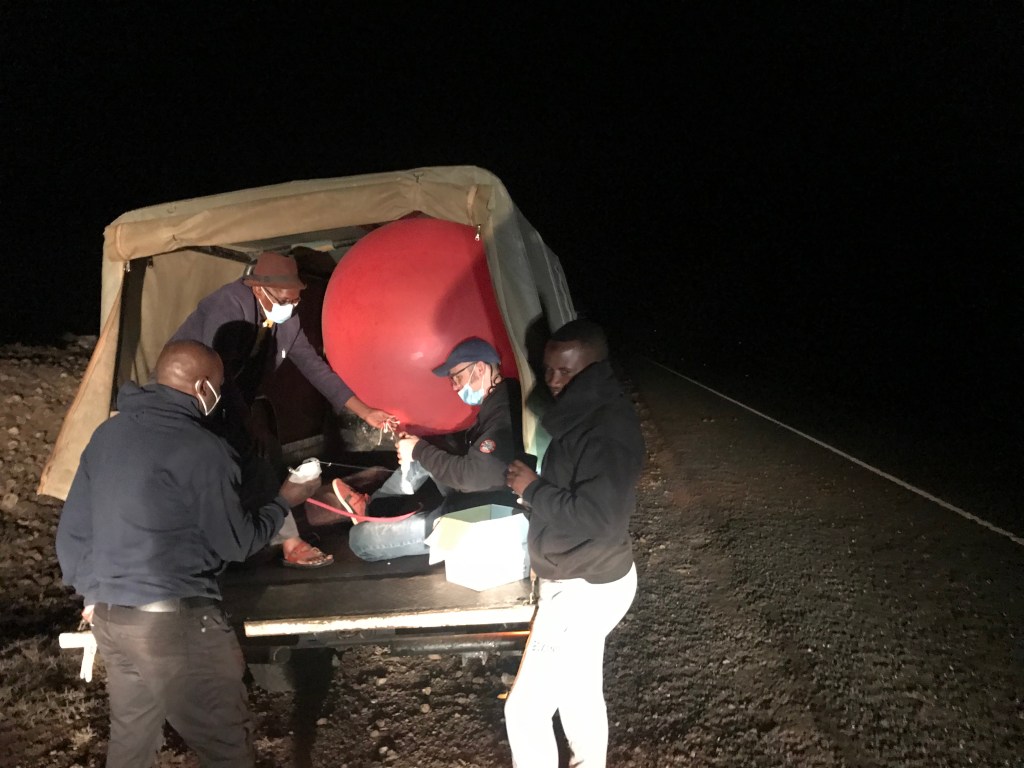
With special permission from the police to break the nocturnal curfew, we travelled down the road with an armed escort to release balloons at 4 am local time. These releases revealed extremely high water vapour transport (above 300 kg/m/s) associated with the Turkana Jet occuring above the Chalbi desert.
Training and collaboration
During the project we wanted to make sure that everyone had the skills to collect and analyse the data. A great part of the field campaign was getting together around the table together and figuring out what was going on in real time.
We are looking forward to continuing our collaboration with a new field campaign (MASIKA) to measure the onset of the long rains in 2024.
 RIFTJet field campaign